
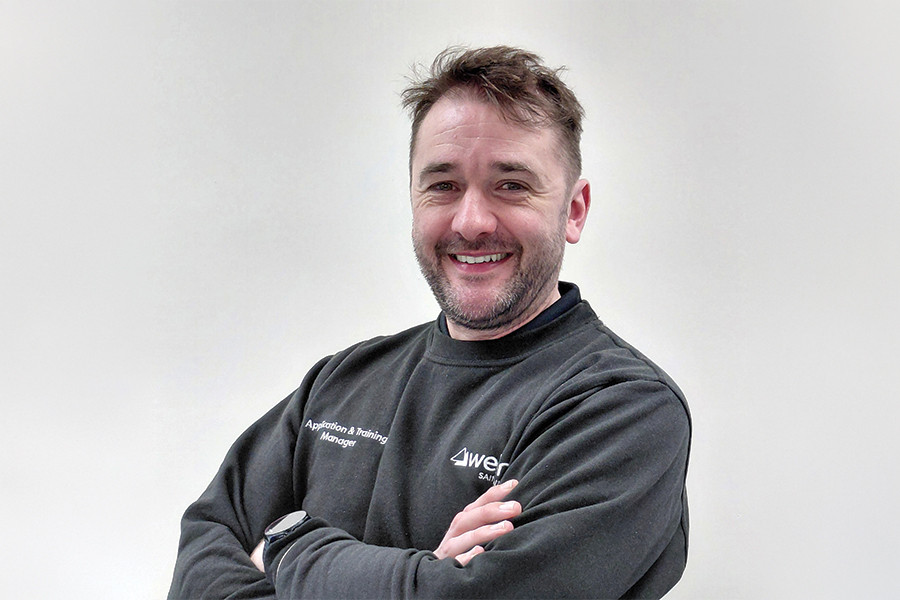
Paul Sycamore, application manager tiling and flooring, Saint-Gobain Weber, discusses the ramifications of new, modular construction practices for the tiling trade
Modern methods of construction (MMC) are changing what “good tiling” looks like.
In factory-built bathroom pods and other modular assemblies, finishes are installed under controlled conditions, then asked to survive handling, transport vibration, craning, and final connection on site. That puts the spotlight on systems that can cope with mixed substrates and movement, not just products that stick a tile to a wall.
The first challenge in MMC pods is substrate variety. Within one pod you might be tiling cementitious boards, gypsum-based panels, fibre-reinforced plastics, proprietary waterproof boards, metal frames and screeded floors. Each behaves differently in terms of porosity, suction and thermal movement.
The safest route is to treat tiling as a system: preparation, priming where required, waterproofing in wet zones, plus a suitable adhesive and grout combination matched to the service conditions.
Fail to prepare, prepare to fail
Preparation is still the foundation. Factory environments can tempt teams to “tile over” dust, release agents or surface residues. Don’t – clean, sound, flat backgrounds are non-negotiable.
Specification best practice
Adhesive selection is where MMC specifics really bite. Pods are effectively moving structures until installed and restrained.
For walls and floors likely to experience deflection, choose a cementitious adhesive with enhanced performance and deformability (typically to BS EN 12004 classifications such as C2 and S1 or S2, depending on design). This includes Weber’s weberset rapid SPF low dust.
Perfecting the technique
Technique matters as much as classification. Use the right trowel for the tile size and aim for full adhesive contact in wet areas, with back buttering where necessary to achieve coverage.
Pay close attention to board joints, corners, penetrations and interfaces around trays and frames. These are movement hotspots, so detail them correctly and maintain movement joints in line with recognised guidance, rather than grouting hard into every change of plane.
Grouting is the final part of resilience. Pods see early commissioning and cleaning regimes, so an improved grout with reduced water absorption and good wear resistance, such as weberjoint premium (CG2), can help maintain appearance and hygiene.
MMC is about repeatability. Document the fixing method, control batch consistency, and train operatives to the same standard every time.
When the pod leaves the factory, the tiling system should already
be capable of coping with the journey.