
TSJ speaks to Folex International about merchandising, market challenges, sustainability and why personal service still matters in the tile sector
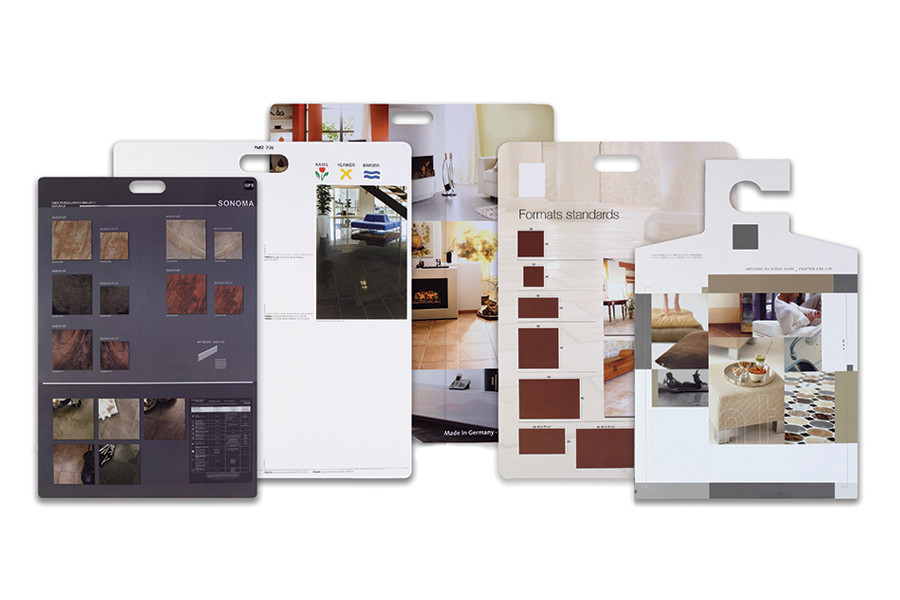
FOR more than 30 years, Folex International has supplied merchandising solutions to the ceramic tile industry. Its main products include sample boards, binders and folders, alongside a wider range of related merchandising products.
Today, Folex exports to around 40 countries and continues to invest in technology, sustainability and customer relationships. TSJ spoke to Vicente Ferriol, director at the company, about how the business has evolved since 1994 and why its future is built around ‘team, progress, investment and technology’.
Q: Can you start by telling us a little bit about Folex International and what the company does?
A: Folex International produces merchandising products for the ceramic tile industry. Our main product is the sample board, and our second key product area is binders and folders. Those products represent around 90% of our production, although we also manufacture other related products for tile merchandising.
Essentially, we help tile manufacturers, importers and distributors present their collections in a professional, practical and attractive way. A tile collection needs to be shown properly. Customers need to see the material, understand the colours, finishes and sizes available, and make an informed decision.
Q: How long has the company been operating?
A: We started operations in 1994, so the company has been working in the sector for more than 30 years. It began as a family business. I was studying at university when I started working alongside my father.
At the beginning, it was a very small company, and we could never have imagined reaching the point we’re at today. Over more than three decades, we’ve seen major changes in the tile industry, promotion and distribution sectors.
Q: What makes Folex stand out in the market?
A: We’re a very international company. We export to around 40 countries, and that gives us a strong understanding of different markets and different ways of promoting tiles.
That experience is important because customers in different countries don’t all need the same thing. A sample board for a Spanish customer may not be the same as one for a British, Canadian, Irish or Italian customer. We adapt the board, format, and the way the product is presented.
Q: What are customers looking for most at the moment?
A: In general, customers need to promote tiles in a way that’s easy, fast and cost-effective. Quality is expected. If you want to compete, quality has to be there. But beyond that, the three key words are easy, fast and affordable.
Many customers tell us that showrooms are not as full of people as they once were. That’s not because of the quality of the tiles – the issue is that people have less time.
Increasingly, customers are saying: ‘You have to come to me.’ Of course, you can’t take the whole showroom to the customer’s house. That’s where our products come in. Our sample boards allow sales teams to take tile collections directly to the customer, show the materials in person and help them decide.
Q: How has the role of merchandising changed?
A: Merchandising has become more mobile, practical and informative. Many years ago, sample boards were very simple. They might have been plain boards with a logo, or sometimes with very little information at all. Now, many customers want to add far more information to the board.
They want pictures, room scenes, wording, technical specifications, available sizes, colours and product details. The final customer wants as much information as possible. A sample board with only one tile doesn’t always say enough. Adding the right images, sizes and technical information helps the customer understand the product properly.
Q: What impact are wider economic pressures having on the market?
A: All global situations and conflicts affect the economy in some way. The price of oil, gas, energy, raw materials and transport all have an impact.
Companies have to adapt and try to keep prices as stable and fair as possible. If prices increase too much, customers can’t buy. But if companies don’t increase prices when their own costs rise, they lose money.
Q: What do you see as the biggest challenges facing the market?
A: Energy is one of the biggest challenges. The price of oil, gas and electricity is very important because it affects production, transport and the final price of products.
What businesses need is stability. If a price is high but stable, at least you can plan. The problem is when prices change constantly. That makes long-term planning and investment very difficult. Customers also don’t like prices changing all the time.
Another challenge, in my opinion, is customer service. The internet is a very good way to do business, and it helps us a lot, but many customers still want personal service. Online business will continue to grow, but personal customer service remains very important.
Q: How is Folex adapting to those challenges?
A: We’re investing in more marketing, more customer visits and more direct contact with customers. Visiting customers is an investment in personal service. When you visit more often, you understand the customer better, and the customer feels looked after.
The market is challenging for everyone, but we believe personal contact, customer care and flexibility are essential.
Q: Sustainability is a major focus across the sector. How is Folex responding?
A: We’re adapting our raw materials in line with European regulations and requirements. In our case, 100% of the products we use are produced in the European community. We don’t import materials from outside Europe. Everything – paper, lamination, MDF and other materials – is produced in Europe.
Last year, we also made a major investment in a new factory plant, with new machinery and new-generation technology. The investment was more than €4 million. In terms of energy, we now produce around 50% of the electricity we use ourselves.
Companies need to invest in cleaner and more eco-friendly energy for the future. We can’t control the price of oil or gas, but we can invest in systems that help us produce our own electricity, save money and support a greener future.
Q: How important is innovation to the business?
A: Innovation is very important. If you want to be at the top, you have to invest in technology.
We’ve invested in new machinery and the latest technology for printing. Technology is essential in production. Without the best machines and latest systems, it’s difficult to produce with the quality customers expect.
Today, for example, we can print around 17,000 sheets per hour. When we started more than 30 years ago, it was around 1,000 sheets per hour. When I compare the quality we can print now with the quality from the early years, it’s completely different.
Q: What is the core message you would like readers to take from Folex International?
A: Team, progress, investment and technology. But first, team.
Technology, investment and progress are all very important, but without your team, you can’t do anything. The team gives you ideas, supports the company and makes progress possible.
That’s the message for the future: team first, then progress. Folex will continue to invest in technology, sustainability and customer service, but the team remains at the heart of the business.
www.folex-international.com