

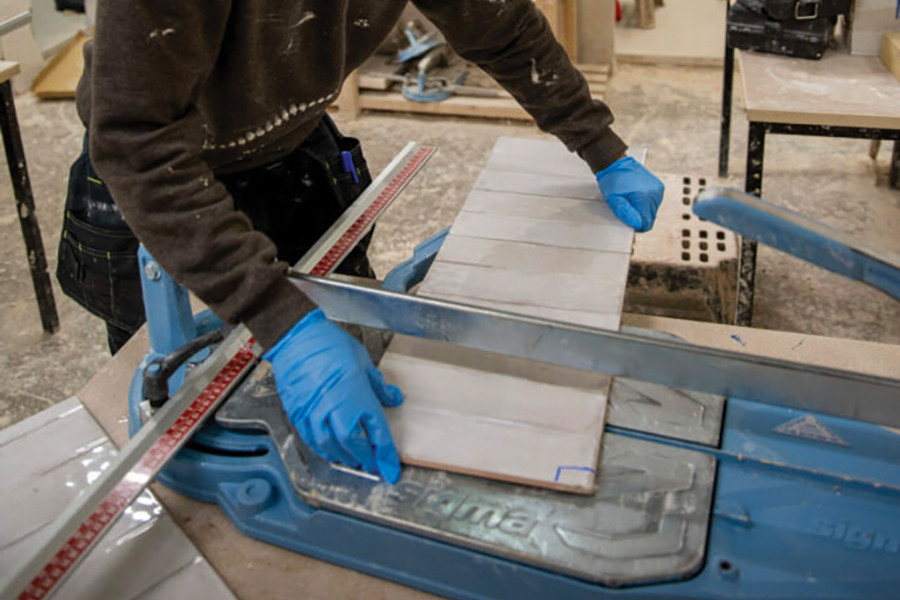
Taking on a tiling apprentice or apprenticeships helps build a skilled workforce for the future, develops higher earning potential for businesses and individuals, and can be completed with between 95% to 100% of training costs fully covered.
At the same time, the tiling sector is undeniably facing key barriers for training the next generation of tilers which need to be addressed at the highest levels. That’s why TTA is continuing to lobby for better funding and support, using its voice to influence the Government and the relevant organisations.
As the trade association representing the entire tiling sector, TTA is also introducing new initiatives and lending support for industry events to promote new tiling entrants and support industry professionals.
The challenge we’re facing
Despite the fact apprenticeships are great for company owners and trainees alike, wall and floor tiling apprentices need to become easier to take on if this sector is going to bring in enough tilers to meet the demands of future generations.
According to recorded data, TTA member tiling companies have experienced a 72% increase in the cost to their business for employing an under-18 apprentice since 2019. Yet, there has not been adequate improvement to grant funding during this time.
With limited numbers of training colleges offering wall and floor tiling courses, it’s also challenging to recruit apprentices outside of specific hubs. However, initiatives such as the Topps Group Apprenticeship Programme, unlimited access to TTA’s industry-leading Technical Publications and a listing on TTA’s website as membership benefits for training colleges starting from just £55 per year, and a free 12-month membership for students once they pass their course all help to make a difference.
In the latest news, the Government has now introduced a new Apprenticeship Hiring Payment, which took effect from 1st October 2026, providing employers who do not pay the Apprenticeship Levy with £2,000 for every apprentice they take on aged between 16 and 24.
Developing plans for vocational GCSEs in Building and Construction from the age of 14 may also help strengthen young people’s access to the industry. These are positive signs, however there is much more to be done to provide for tomorrow’s tilers starting today.