
Showcasing the latest designs, surface innovations and creative possibilities in ceramic tiles, this year’s Cersaie exhibition in Bologna offered a compelling look at the directions shaping Spanish tile design for 2027. Across the collections, warm natural tones and understated material effects sat alongside tactile surfaces, earthy colour and expressive decorative layouts. María D Arráez, Director of Tile of Spain UK and Clara Vicedo, Marketing and Communications Executive at ASCER, share their selection of emerging trends.
The warmth of natural materials
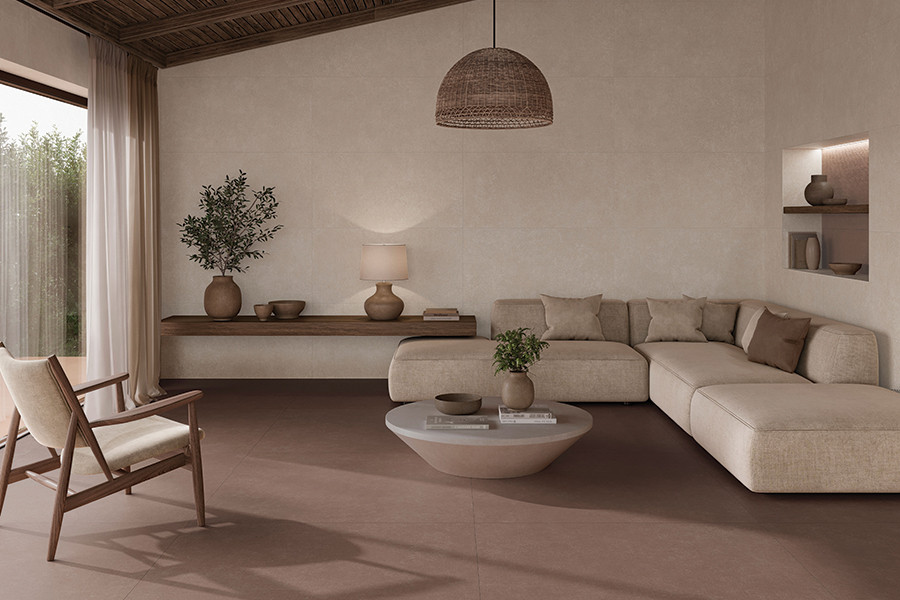
Natural materials continue to provide an important source of inspiration for ceramic tile design, with collections exploring the subtle beauty of stone, marble, limestone and wood through a contemporary lens. Across the latest designs, warm ivory, sandy beige and soft greige tones create a sense of calm, while mineral detailing, tonal variation and expressive veining bring depth and individuality to the surface. Rather than relying on dramatic contrasts, many of these designs celebrate the quieter details found in natural materials. Large-format stone effects create a seamless, architectural feel, while wood-effect ceramics introduce warmth and the familiar character of timber, with formats and layouts ranging from classic planks to herringbone patterns. The result is a versatile approach to natural inspiration, balancing understated elegance with the durability and practical benefits of ceramic surfaces.
A more tactile approach
Texture is an increasingly compelling way to bring character to interior spaces, allowing ceramic surfaces to make an impression through their finish and interaction with light. From ribbed and linear details to sculptural patterns, softly irregular surfaces and smaller-format tiles, the latest collections demonstrate how texture can add another layer of interest without the need for bold colour or elaborate decoration.
This approach works particularly well with restrained palettes, where subtle changes in surface and finish become more noticeable. Tactile tiles can introduce rhythm to a bathroom wall, add definition to a kitchen splashback or create a focal point within a neutral interior. Combined with natural materials, warm lighting and carefully considered detailing, textured ceramics bring a sense of depth and craftsmanship to contemporary spaces.
Earthy colour, richer character
Colour is bringing renewed personality to ceramic interiors, with earthy shades providing a natural starting point for more expressive combinations. Terracotta, clay, rust and deep reddish-brown tones appear alongside moss and olive greens, while warm creams, sandy beiges and soft off-whites provide balance. Rather than abandoning neutral palettes, this approach builds on them, introducing colour in ways that feel grounded, considered and inviting.
Ceramic tiles offer considerable scope to explore these shades through different finishes, formats and laying patterns. Richly coloured wall tiles can create a striking kitchen splashback, while green ceramics bring depth to bathroom schemes and terracotta tones add warmth to kitchens and living spaces. Glossy surfaces can intensify colour and reflect light, while matt finishes offer a more understated effect. Used selectively or across larger areas, earthy colour creates interiors with a distinctive identity while retaining a strong connection to natural materials.
Pattern with purpose
Pattern is finding fresh expression through the interplay of geometry, format and colour. From herringbone and chevron layouts to graphic floor designs, small-format arrangements and decorative wall tiles, the latest collections show how the composition of a surface can be just as important as the tile itself. Traditional references sit comfortably alongside contemporary interiors, offering opportunities to introduce detail without compromising a space’s overall simplicity.
Colour and contrast play an important role in this approach, whether through terracotta and cream combinations, darker accent tiles or geometric motifs that bring movement to floors and walls. Pattern can be used to define a particular area, draw attention to an architectural feature or create a focal point within an otherwise restrained scheme. By combining considered layouts with distinctive finishes and carefully balanced palettes, ceramic tiles offer a flexible way to bring individuality and visual rhythm to both modern and more traditional interiors.”
Looking ahead to 2027, Spanish ceramic tiles continue to push the boundaries of design, combining the beauty of natural materials with tactile finishes, earthy colour and creative pattern. These emerging trends demonstrate the versatility of ceramic surfaces, offering endless possibilities to create interiors that feel both contemporary and individual. With innovation, craftsmanship and design at their core, Spanish manufacturers are showing how tile can bring lasting character and personality to every space.