
From preparation to finish, great tiling depends on more than skill – it depends on the right tools. As materials evolve and expectations rise, precision, efficiency and ergonomics are critical on site. Today’s professional tools are built to improve safety, protect surfaces and deliver flawless results. Here, leading brands explain how innovation is helping tilers work smarter and finish stronger.
The right tool for the job
Mark Atkins, director at LTP, elaborates on the importance of ensuring you have right tools for the job
USING the right tool for the job makes all the difference. For many years, we received calls from customers asking for advice on the best tools to use for cleaning, sealing and protecting tile and stone surfaces. In some cases, we were able to make a recommendation; in others, the tool didn’t exist, so we decided to source our own range of LTP tools and cleaning pads.
In terms of solution application, the advantages of using the right tool are far reaching. You use less cleaner, sealer or protector to do the job and application is faster and easier, saving time and money. A well applied product will also perform better; in the case of a cleaner, this may reduce the frequency of cleaning required and prevent a build-up of residue which makes maintenance more difficult and can create a slip hazard. Similarly, a well applied sealer will create a clean, uniform seal over the tile surface, in corners and between tiles and fixtures, providing optimum protection. In turn, the need for costly surface renovation will be removed.
For more general cleaning – post installation or in refurbishments – a good professional tool beats a household cleaning tool time and time again. For example, a green scouring pad is too abrasive and can dull/etch a tile, along with any sealer applied, and potentially stain absorbent stone and cement-based grout. A professional non-scratch white emulsifying pad is recommended and will eliminate these issues; it should be used with a pad holder to ensure even pressure. Likewise, a professional claw brush beats a toothbrush every time; it’s stiffer, more durable and better at working into tight awkward spaces and corners.
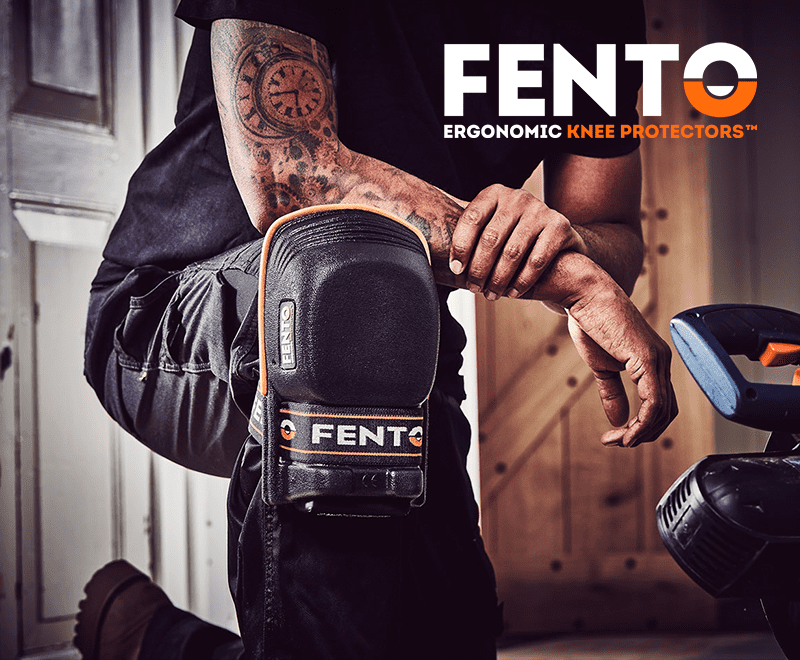
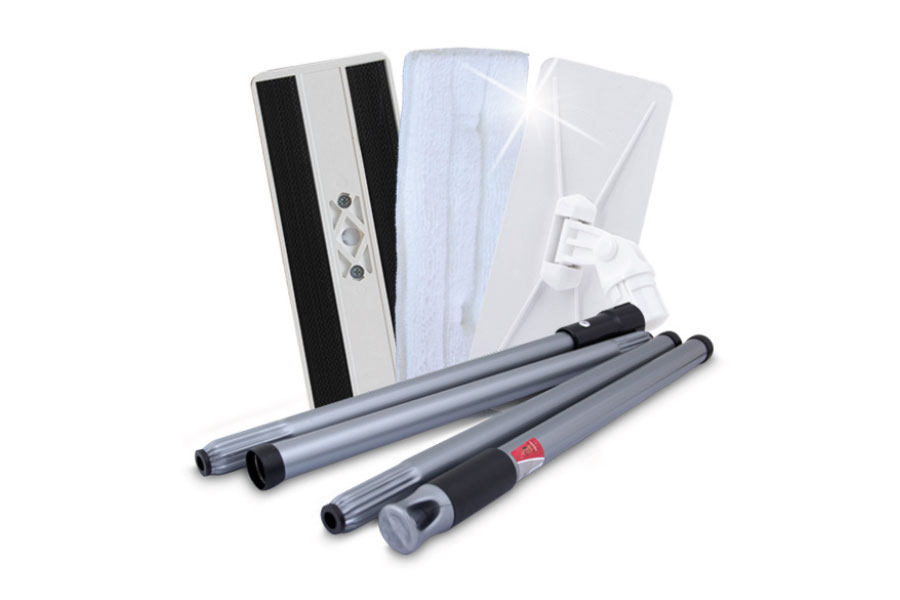
Good tools are also more ergonomically suited to the job, reducing the risk of injury, sprains and pulled muscles. Tilers spend an incredible amount of time on their knees and, as a result, knee problems like bursitis and cartilage wear are very common. In terms of sealer application, this is especially prevalent among tilers that fix a lot of natural stone, where the sealing process can take several coats. Using a pad holder and sealer applicator on a 4-piece pole is not only better for your knees – allowing you to stand or kneel comfortably, rather than crawling – it’s also a more efficient and a quicker way of applying the protection. When used on honed and polished surfaces, it really helps to ensure even distribution and a streak-free finish, especially when applying a finishing coat of liquid wax.
Often, a combination of tools offers the best results. A sealer applicator is ideal for general floor application, but a hand-held emulsifying pad is best used close to skirting boards, to avoid knocking paintwork. A good tools range will provide all of these options, significantly increasing efficiency, improving job-site safety and guaranteeing a high-quality finish.
LTP’s range of tools and cleaning pads includes emulsifying and sealant pads and holders; coarse and smooth pads with handles; buffing cloths; grout, deck and claw brushes; universal 4-piece handles and cleaning and sealing kits.
01823 666213
info@ltp-online.co.uk
www.ltp-online.co.uk