

A closer look at how polished and satin ceramic finishes combine technology, performance and design impact
IN contemporary ceramics, the surface isn’t merely the end of production but the point where technology and design converge. In the UK, polished and satin finishes are often compared; each produces a distinct visual and tactile effect despite shared aims of enhancing a scheme’s character.
The polished finish delivers luxury and spatial amplification. Achieved by mechanical abrasion after firing, using progressively finer diamond abrasives to remove a microlayer of glaze or body, polishing yields a mirror-like specular shine. Its primary benefit is maximising luminosity: in low-light interiors a polished surface reflects and projects light, creating depth that matt alternatives cannot reproduce. Precision is essential, however, since any optical irregularity will degrade the reflection.
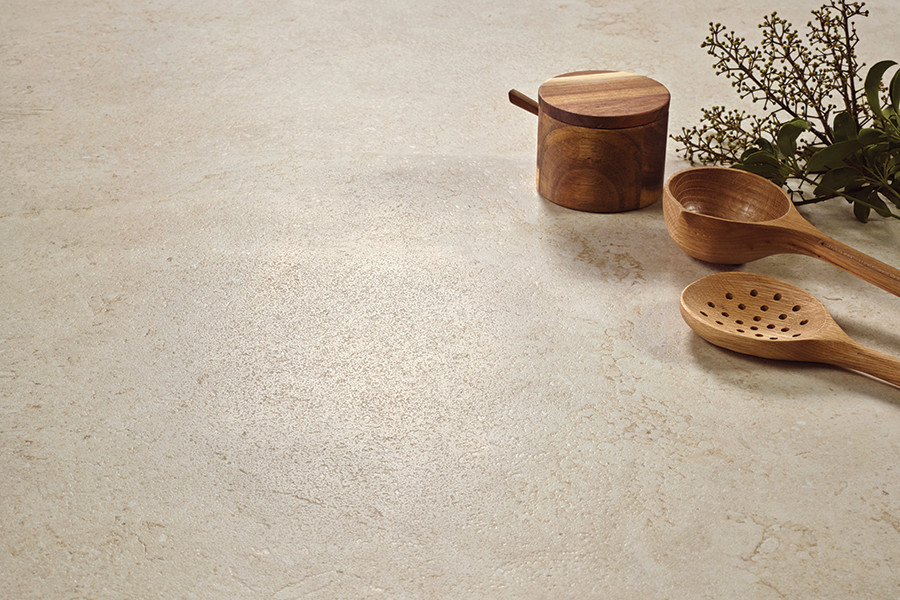
Satin offers a contrasting approach. Formulated with specialised glazes and raw materials that cool to form a microscopically smooth texture, satin produces a diffused reflection and a subtle matt sheen.
The result is a tactile, tranquil surface that favours biophilic and residential settings where an organic, understated aesthetic and resistance to fingerprinting are priorities.
Lappato occupies the mid-ground. A light polishing abrades only the highest texture points, combining selective sheen with matt restraint to produce a zoned-brightness effect. Lappato is prized where designers seek visual complexity and character without the maintenance implications of high gloss.
When specifying for floors versus walls, bear in mind polished tiles suit low-traffic or feature areas unless specifically treated to improve slip resistance; satin and lappato are more forgiving for circulation zones.
Pay attention to the scale of veining and print repetition in large-format layouts to avoid apparent patterning. Plan maintenance at the specification stage: polished surfaces may require specialist cleaning to preserve optical clarity, while satin finishes generally need only routine cleaning and maintenance.
Ultimately, selection should be guided by the project brief, expected levels of wear, lighting strategy and desired sensory qualities. Early collaboration between designers, specifiers and suppliers ensures the chosen finish sustains longevity and performance while achieving the desired aesthetic.
Trial panels and mock-ups are recommended for large schemes to verify appearance under site lighting conditions.
STN Cerámica has developed the ASTRA polishing technology, which achieves exceptional visual clarity and depth by eliminating haze associated with lower-grade products. ASTRA enhances colour vibrancy and marble veining with a near three-dimensional definition.
All commercial installations are supported by expert design guidance, installation and maintenance advice, streamlined logistics, and rigorous quality control tests for gloss and planarity, ensuring consistent technical excellence for specifiers and designers.