
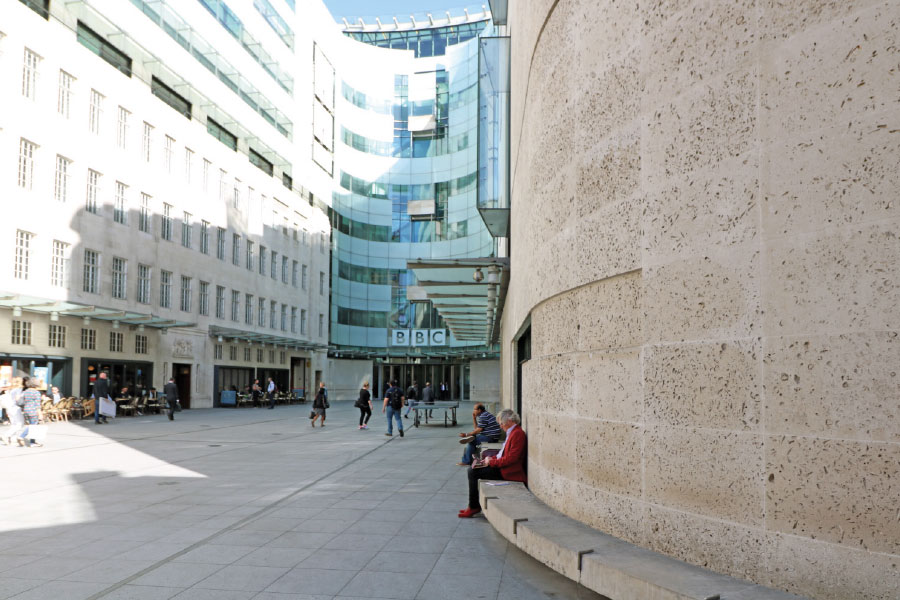
Heritage, low-carbon mining and the future of UK stone
From a family business founded in 1905 to a strategic shift from quarrying to mining, Michael Poultney, managing director of Albion Stone discusses local sourcing, sustainability, structural stone and the challenges facing the UK natural stone sector.
Q: Who is Albion Stone? What is its background and history?
A: Albion Stone was founded in 1905 in Merton, near Wimbledon, cutting stone for projects in London. It was incorporated in 1927, and my grandfather bought the business in 1955, so it has been family-owned for decades.
Originally, we were a relatively small company manufacturing and supplying stone into London. My father became involved in 1965, and after the original manufacturing site near Wimbledon became surrounded by houses, we could see the writing on the wall so in 1989 moved manufacturing down to Portland Dorset after taking a lease on a massive factory alongside the quarries.
I became involved in the mid-to-late 1980s and took over from my father in the early 1990s. Around that time, we began transitioning from quarrying to mining. Planning authorities were reluctant to grant permissions for new quarries, but mining was more achievable. It required significant financial investment and specialist expertise, but it secured the long-term future of the business.
Q: British stone has seen renewed interest in recent years. What’s driving demand for locally sourced natural stone, and how is Albion Stone responding to this shift?
A: There are two competing factors in the market: cost and carbon. Some clients prioritise lowest price, while others are increasingly focused on embodied carbon and local sourcing.
The stone industry created a challenge for itself through over-selection. Historically, architects specified geological beds. Over time, aesthetic expectations narrowed, meaning more material was rejected despite being perfectly sound. That increased waste and cost.
We introduced Heritage Portland Stone to reflect the full geological range, rather than limiting it to a tight visual brief. Stone is a natural material; variation is part of its character. By reducing rejection rates, we reduce waste and embodied carbon. In that sense, less selective stone can be more affordable and lower carbon.
Q: Can you explain the key characteristics of Portland stone and why it remains such a popular choice for traditional and contemporary projects?
A: Portland stone has a neutral colour, is workable, and performs extremely well in polluted and freeze–thaw environments. That’s one reason it became widely used in London following the Great Fire.
Geology is critical. Some stones may appear dense but perform poorly under crystallisation pressures from moisture or salts. Portland’s internal structure allows it to weather consistently across applications, from façades and cladding to paving and internal flooring.
Its tonal consistency and versatility mean it works equally well in heritage restoration and contemporary architecture.
Q: Sustainability is increasingly important to specifiers and clients. How does Albion Stone ensure responsible quarrying and low environmental impact across its operations?
A: By moving from quarrying to mining, we’ve reduced the amount of waste material that needs to be removed. We’ve installed solar panels on our factory roof, switched from diesel generators to mains electricity, and invested in more efficient cutting technologies.
Stone cutting is effectively grinding a slot through the material. Older saws had wider cuts, meaning material was lost with every slice. Replacing those with thinner wire saws has reduced waste considerably.
We believe we now have one of the lowest genuine A1–A3 Environmental Product Declaration (EPD) figures in our sector. People talk about sustainability at specification stage, but once contractors are pricing the job, reducing cost often takes over.
Q: How has modern technology changed the way natural stone is extracted, processed, and supplied compared to more traditional methods?
A: Mining today requires significant investment and is safety-focused. Modern drilling rigs and roof support systems have transformed efficiency and risk management.
In the factory, CNC machinery allows us to programme complex shapes directly from CAD drawings. Pieces can be roughed out automatically and then finished in the stone workshop. That level of computerisation has improved repeatability and reduced manual reworking.
Technology hasn’t changed the nature of stone, but it has significantly improved how efficiently and safely we work with it.
Q: What should architects, designers, and installers consider when specifying natural stone for different applications such as façades, flooring, or external paving?
A: It’s always worth looking at what’s been used locally. There’s usually a reason certain stones have historically been used in particular environments.
Secondly, ensure suitability for application. External paving, façades and internal flooring all place different demands on material.
Finally, think long term. Consider durability, reliability of supply and how the stone will age. The closer designers are to the quarry, the better informed their decisions will be. Stone itself is rarely the issue; incorrect specification tends to be.
Q: How important is education within the supply chain, and what role does Albion Stone play in supporting designers and installers with technical knowledge?
A: Education is extremely important. I sit on the British Standards committee for natural stone, contributing to technical guidance and standards as well as being part of The Stone Federation.
We provide technical information to support designers, highlighting key considerations to help avoid common issues. Experienced fixers are essential, but early-stage understanding makes a significant difference to long-term performance.
Q: Are you seeing any notable trends in how natural stone is being used in modern construction and design projects?
A: We’re seeing renewed interest in using stone as part of the structure itself. For many years, it’s mainly been used as a thin outer layer fixed to metal support systems. In some cases, it can be more straightforward and potentially lower carbon to use stone structurally.
We’re also developing stone bricks – brick-sized pieces of natural stone that allow designers to use a familiar format while benefiting from the compressive strength and durability of stone. Interest is growing, particularly where design quality and environmental performance are priorities.
Q: With increasing pressure on materials to meet long-term durability and lifecycle requirements, how does natural stone compare to manufactured alternatives?
A: Stone performs exceptionally well over long lifespans. In London, it’s common to keep the original façades, and the existing stone can often be reused if it’s detailed and installed correctly. Fixing methods matter. Some systems allow stone to be dismantled and reused, while others make recovery difficult. Designing with lifecycle in mind is essential.
When properly specified, natural stone can last for centuries.
Q: Looking ahead, what do you see as the biggest opportunities and challenges for the natural stone sector in the UK?
A: Opportunities lie in structural applications, stone brick development, and reducing unnecessary selection to lower carbon and waste.
The challenge is competing in a market where lowest upfront cost often dominates decision-making. If local production declines in the UK, it’s hard to rebuild it again. However, there remains strong demand for well-specified, locally sourced stone used for the right reasons – performance, longevity and environmental responsibility.
www.albionstone.com